
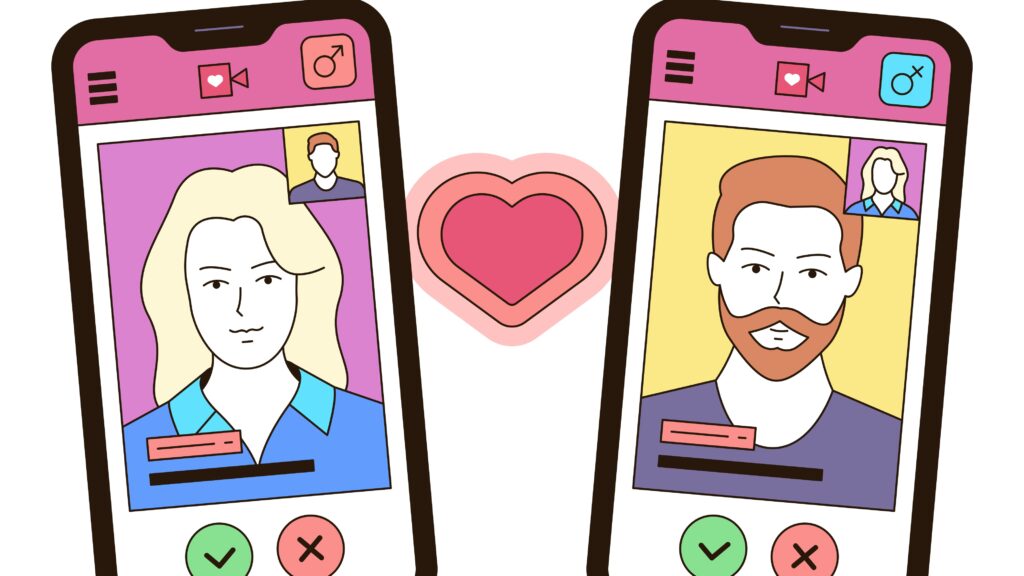
Most of us have ideas about what we’re looking for in a romantic partner. But psychologist Paul Eastwick says these preferences are surprisingly poor guides for finding love. He explains why attraction is so difficult to predict, and what the research suggests is the best way to meet someone with whom you’ll connect. Then, in a new installment of “Your Questions Answered,” psychologist Ed Lemay responds to your questions about how we project our own thoughts and feelings onto other people, and how these projections shape our relationships.
In our companion conversation for Hidden Brain+ subscribers, we talk with Paul Eastwick about online dating apps. He says apps can powerfully shape our experience of meeting potential romantic partners — often not for the better. If you’re a subscriber, that episode is called “The Online Dating Trap.” If you’re not yet a subscriber, you can listen to that conversation with a free seven-day trial to Hidden Brain+ by going to support.hiddenbrain.org. If you use an Apple device, you can subscribe via Apple Podcasts at apple.co/hidden brain.
Episode illustration by Bekeen.co for Unsplash+
Transcript
The transcript below may be for an earlier version of this episode. Our transcripts are provided by various partners and may contain errors or deviate slightly from the audio.
Shankar Vedantam: This is Hidden Brain. I'm Shankar Vedantam. In the 2013 romantic comedy About Time, a young man and woman meet each other for the first time. He has that look on his face like he's been struck by lightning. She looks like she's been struck by the same bolt. They are hesitant. They look at each other shyly. She awkwardly starts to leave when he asks her for her number. She agrees to give it to him. He hands her his phone. She puts in her number and hands it back. She tells him her name. Mary: It’s “Mary.” Tim: “Mary.” Mary: [Hands it back.] Okay. Tim: I thought this phone was old and [bleep]. But suddenly it’s my most valuable possession. The bolt of infatuation is a rom-com cliche. Two strangers lock eyes and the universe clicks into place. Their instant attraction is a cosmic check mark, a sign these two individuals have found the one person on the planet who is meant for them. A steady diet of these scenes has conditioned all of us to believe that if the sparks don't fly in the first five seconds, we're in the wrong movie. But in the messy, unscripted reality of our own lives, is this cinematic thunderbolt a reliable guide to the human heart? SHANKAR VEDANTAM: This week on Hidden Brain, and in a companion story on Hidden Brain Plus, we explore the counterintuitive science of attraction—and why the qualities we think we want in a partner have surprisingly little to do with whom we actually fall in love. SHANKAR VEDANTAM: Over the last 200 years, there's been a profound shift in the way people find mates. Instead of having our families or clans pick the people we marry, we go scouting for soulmates ourselves. We pore over photographs in dating apps, scroll through social media to gauge if we share the same tastes in movies and music, and quiz mutual friends. The underlying intuitions here are so obvious that they barely need explanation. We know what will make us happy, and we want someone who checks all our boxes. At the University of California-Davis, psychologist Paul Eastwick has some bad news for you: Your intuitions about what you want from a romantic partner are not always reliable. Paul Eastwick, welcome to Hidden Brain. Paul Eastwick: Thank you so much for having me, Shankar. SHANKAR VEDANTAM: Paul, I want to take you back on your own journey of discovery into the science of mating. Back when you were a teenager, you had a girlfriend who broke up with you. Tell me what happened and also what happened next. Paul Eastwick: So, you know, it was one of those early adolescent romances and I was very much in love with her, but it didn't last. You know, this happens, but it was pretty crushing. Uh, nevertheless, I soldiered forth and I remember shortly after that breakup being at a cabin with my parents, uh, over the summer. And they got Time magazine. And there was this issue of Time magazine with a broken wedding band on the cover on a stark black background. And the headline was “Infidelity: It May Be in Our Genes.” Hmm. And I read the article, it was very interesting, but also pretty distressing because the article was about this new science and all of the things that folks were discovering about the way that human attraction and human relationships work. And it wasn't a happy story. It talks about how people are often looking to trade up to get better partners, how men and women are really, really different from each other. And it just seemed to be speaking to me like, Hmm, I wonder if these are some of the reasons why you were broken up with this thing Was never meant to last, was it? Hmm. Uh, yeah, it, it definitely made an impression on me at that age. SHANKAR VEDANTAM: Now I understand that your ex-girlfriend went on to date your best friend. Now obviously you and your girlfriend weren't married, you'd already broken up. So this is not really infidelity, but it must have raised some questions in your head. Paul Eastwick: It definitely did because you realize, like, you know, if this thing is a dog-eat-dog competition, this feels terrible. And as thrilling as it had been to be in what was really my first romantic relationship, boy, this feels terrible on the other side. And you felt like you were staring down this dark tunnel. Like, according to this article, it's always gonna be like this. I'm perpetually gonna be scratching and clawing my way to get somebody who's, you know, as attractive and desirable as I am. And, they're always gonna be looking to trade up on me. So it, it was certainly a fear-inducing moment. SHANKAR VEDANTAM: So later on you got some advice from a friend about how to become more successful in attracting women. Uh, this friend gave you a set of rules, I understand. Paul Eastwick: He looked at me and he said, okay, we have a little work to do here. Okay. We need to improve these clothes. Where are you shopping? You need to spend a little more money on the clothes. Okay, now we got let's do a little bit more working out here. Okay. Can we, can we hit the gym a few times and goes on to list several ways that I can make myself more desirable. He's genuinely trying to help, but, um, they all really focus on like, what I can do to boost my attributes. And, you know, that's sort of his general strategy here. SHANKAR VEDANTAM: Hmm. And in some ways, this matches the story that you are in a competition with, with other men. Uh, women are choosing the best partner and you need to claw your way up. Uh, maybe you are a six right now and you need to claw your way up to an eight if you're gonna have a chance. Paul Eastwick: Yeah, exactly. And he had this great quote, which was, look, man, you and I we're not tens. And it's not gonna come as easily for us, but we can still play in this game too. I, I, you know, and I use the term game intentionally because that was what it felt like. We were just gonna have to put in a little extra work. Hmm. And this is how many people think about dating and what we do. When we experience dating struggles, we gotta level up, we gotta boost our attributes. This idea is very common. SHANKAR VEDANTAM: Eventually you met a woman named Lauren, with whom you felt a mutual attraction, but Lauren was torn between you and another young man. Describe the situation and how it turned out, Paul. Paul Eastwick: Yeah, so, you know, he seems my rival here. He seems all right, but I think this can't really be a threat because he's a very strange fit with her. And I know Lauren enough by this point. We're in the same group of friends. I know that I'm pretty much what she's looking for. I mean, we're both at the beginning of adulting, and so we talk about, oh, we're gonna be getting our own apartment soon and paying our own rent and getting real jobs with benefits, and we have similar interests. I mean, We even sound amazing singing together because we more or less have the same singing range and that's not exactly common. And so even though my romantic success up until this point, I would call middling, but I'm pretty sure I can't lose this one. I know I'm what she's looking for. SHANKAR VEDANTAM: Hmm. so in some ways this is a real life version, uh, of the, the scenario you described brought to life. You are actually in competition with another man, and you have a woman choosing between the two of you. I imagine you must have gone to some lengths to make yourself as interesting and as attractive as possible. Paul Eastwick: I did, but at the time, I mean, I think the thing I was focused mostly on was highlighting our similarities and all the ways that I fit what exactly she was looking for in a partner, right? I mean, trying to highlight those points of connection between the two of us. So after a little while, she asked me to meet in this bar, and it's a bar, he's not gonna be there. This isn't really his scene. And she says, you're exactly what I've been looking for. You're smart, you're accomplished. And we have pretty much everything in common—but I'm not feeling it, and I'm choosing him. And I'm thinking—wait a minute, can we just look at the scoreboard here and check all the boxes? You know, she knows it. I know it. She should be feeling it. Why isn't she feeling it? And it was this new moment of confusion, realizing that I, I guess, you know, meeting all of what somebody's looking for in a partner isn't always gonna work out. SHANKAR VEDANTAM: Paul's romantic misadventures are probably familiar to you. You two may have found yourself bewildered by the vagaries and [00:10:00] unpredictability of romantic attraction. When we come back, one reason we get love so wrong is because the model we have in our heads is flawed. You're listening to Hidden Brain. I'm Shankar Vedantam. This is Hidden Brain. I'm Shankar Vedantam. Spend a minute on YouTube or social media and you'll hear lots of advice on how to find true love. This advice may be well-meaning, but that doesn't mean it has much evidence supporting it. In recent years, researchers have tried to study questions related to love and compatibility. At the University of California-Davis, psychologist Paul Eastwick has found that one popular theory about love often has the loudest voice in the room. Paul, the field of evolutionary psychology has developed a distinctive view about how men and women meet and mate and relate to one another. That view has been amplified and exaggerated by voices in the popular culture producing what you call the "the evo script.” What is the evo script? Paul Eastwick: So the evo script contains three central ideas, and I think these ideas will be familiar to many folks. One is that we all have this thing called a mate value, and you can imagine a value on a one to 10 scale that kind of pinpoints where you are in terms of what you can offer somebody as a romantic partner, and that this value determines how well you're gonna do out there on the mating market. The second component is the idea that men and women are quite different. They want different things out of their relationships. They're motivated by different concerns. And the third component is this idea that there's a fundamental distinction between short term and long-term mating. And that people use different strategies when they're pursuing different kinds of partners. And importantly, like you might be good at one of those things or the other, and you kind of gotta pick a lane. So those are the three central ideas in what I call the evo script. SHANKAR VEDANTAM: Hmm. Now, as a young man, you heard versions of this when your friend was telling you to, you know, lift weights in order to attract women. It was in fact a version of the evo script. Paul Eastwick: Exactly. I mean, that was really the mate value idea in a nutshell, that, look, maybe I'm a six if I don't really do anything to improve my attributes, but if I work out and I try to be a little funnier, maybe work on my confidence, maybe I can, you know, work my way up to a seven or even an eight on this made value scale and it's gonna affect how easy things are for me when I'm trying to talk to women at bars or talk to women at parties. And if online dating had been around, then it would've affected how well I could do it online dating, too. SHANKAR VEDANTAM: Hmm. One of the problems that you've identified with some of the ideas in the evo script has to do with the difference between asking someone to look at a set of photographs in a lab and pick out people they're attracted to, and looking at how people behave in the real world. What's the difference, Paul? Paul Eastwick: Well, here's one really central difference. When we're looking at photographs and when we're meeting strangers too, there's reasonably good consensus about who's attractive and who's not. Many, many studies use these approaches: “Oh, here are a set of photographs. Let's have people rate them in terms of their physical attractiveness.” You know—which ones are likely to be more romantically successful? It's gonna be the folks that are rated as more attractive. But I think what this idea misses is that our consensus about somebody's attractiveness actually goes down as people get to know each other over time. SHANKAR VEDANTAM: Hmm. Paul Eastwick: So here's what that means. If this person that we're evaluating, let's say that the consensus is that they're a six. Well, when we were looking at photographs, yeah. Some people say seven, some people say five. But we're pretty tightly clustered around that six. As we get to know folks, now some people think this person's a three, but some people think they're a nine, and this is really key because relationships are gonna work best when two people find each other, who think that each other is a 10. SHANKAR VEDANTAM: Hmm. I mean, and in some ways when it comes to romantic love, you know, we don't actually require 20,000 people to believe that we are their soulmate. We require one person to believe that we are their soulmate. Paul Eastwick: Yeah. I mean, and you know, it matches up pretty well with what our ancestral past was actually like. I mean, this deluge of potential partners that we experience here in the 21st century in any kind of modern urban context. Um, we did not meet this many people when we lived on the savannah a hundred thousand, 500,000 years ago. SHANKAR VEDANTAM: Hmm. Paul Eastwick: You probably lived in a group of 50 people. There might be a couple other groups nearby, but we're talking 150 people total. How many are your age and your preferred gender? It's not gonna be all that many people. So we had to make it work with a small number of options. But within this small group, you at least had the luxury of getting to know these people over time, and that would've opened up the possibility that you could find somebody who was especially appealing to you and you were especially appealing to them. SHANKAR VEDANTAM: So you've designed a number of studies that try and get at these questions, Paul. Um, these studies have generated some surprising discoveries. One of them is that although most of us say that we have a type, what we say we want in a partner isn't what we actually choose when it comes to partners. Unpack this idea for me. Paul Eastwick: Yeah. So this is fascinating and look, there's been a lot of really interesting research asking people about the traits that you might want in a partner. So, if I were to ask you this question, you know, maybe you'd come up with things like, well, I really wanna be with somebody who's intelligent and, uh, somebody who's adventurous and somebody who's funny. Okay. So these are three attributes that really appeal to you specifically. I think the assumption here is that, well, if I were to set you up with people who had those attributes as opposed to some other collection of attributes that you'd like those partners more. This gets at this distinction that I think is really key: the distinction between what people say they want in a partner, those three traits you listed, and what people actually want in a partner when they meet people face-to-face. So we do studies where we introduce folks to potential partners, and it's true. If I introduce you to somebody who has those three qualities, you're probably gonna like her more. But the tricky part is this: if instead she had three different qualities, she was especially attractive and sociable and a really supportive, kind person. You would've liked her just as much, even though those weren't the three things that you listed. In other words, the things that we say we're looking for don't match up all that well with the traits that actually appeal to us once we meet folks face to face. SHANKAR VEDANTAM: In some ways, this goes back to what happened with you and Lauren, uh, Paul, um, on paper you were perfect for Lauren. If she was drawing up a list of attributes, uh, you would have won, but she wasn't. And so you didn't. Paul Eastwick: Yeah, I think that's exactly right. And you know, I might wish that she had been doing that, but that wasn't the process that she was using. Nevertheless, I think her experience is probably a common one, that we meet people who seem to check all the boxes and we just don't quite feel it. Alternatively, what it's gonna mean is that sometimes you meet somebody and they're not the person that you would've drawn up ahead of time. But now here they are in front of you and there's just something about them. I think this is a very common experience and we see it all over the place in the data. SHANKAR VEDANTAM: I'm wondering, Paul, if you have an intuition of why it is that our stated preferences don't match what, you know, economists would call our revealed preferences. What we actually choose is it because we actually have many, many preferences and when we're asked to pick, you know, we pick the top three that we think are the most salient without realizing that we in fact have probably hundreds of preferences that go into our judgment of another person. Paul Eastwick: I think this is a very useful way to think about it, yes. Part of the issue is that it's computationally very complex to think about all the attributes that somebody might have. If we look at more than somebody's three deal breakers and we expand it out to 35 traits, we can start to make a little headway on why you like one person but not somebody else. But even then, we're not getting close to explaining the full detail, why it's this person that really appeals to you. SHANKAR VEDANTAM: Hmm. It's also the case that the weights that we have attached to these different criteria might in fact be hidden from us. In other words, I could say that I want somebody who's funny and somebody who's adventurous, but how important is funny versus adventurous versus attractive versus outgoing versus kind? All of these weights might be different, and I might not know the precise weighting that I myself have inside my head. Paul Eastwick: I think that's exactly right. And look, we don't get to date enough people in our lives. Most of us, we don't get to date enough people to do all the proper comparisons and all the proper introspection to figure out those complexities. Mm-hmm. So, you know, we're working with only a few samples here as we're going about trying to choose a partner. So I, I think for that reason too, yeah, our introspection is a little bit limited, especially in this context because of how complex it is. SHANKAR VEDANTAM: Mm-hmm. A central claim we hear from the evo script is about the differences between men and women when it comes to their preferences. This script suggests that the romantic currency for men is their wealth and status, and the romantic currency for women is looks and attractiveness. It’s also worth noting that we’re talking about heterosexual men and women in this context. You say the important question is not whether these things matter, but how much they matter, Paul? Paul Eastwick: This was one of the first things that we got into when we started studying what makes people initially attracted to each other in live interaction contexts. We were interested in speed dating because this was a new idea at the time, about 20 years ago. You could introduce people to each other, have them go on short four minute dates, see who clicked and who didn't. And we were comparing what people were saying beforehand about what their preferences were with what they actually liked at the events. So our participants, you saw the typical gender differences. Men would say they care about attractiveness more than women, and women would say they care about earning potential and ambition more than men. But we'd have them go speed dating. And what you'd see is that for an attribute like ambition. Yeah, the ambitious men, they would be liked by the women a little bit more than the unambitious men, but when you flipped it around, the ambitious women were liked the little bit more than the unambitious women, and there was no gender difference in the draw of a person's ambition in that initial attraction context. And that was the first clue that, well, men and women might be showing some differences over here, but they're not showing it over here. SHANKAR VEDANTAM: It's also the case that when you look at what men and women share in terms of what they're looking for in a partner, the things that they share in common turn out to dwarf the things that in fact might be distinctions. Paul Eastwick: When you look at ongoing relationships, gender differences are not especially common. The things that men want, you know, men are looking for somebody who's gonna support them, who's gonna celebrate their successes, who's, you know, gonna be there for them. And that's what women want too. They want somebody who's gonna support them and celebrate their successes. Um, ongoing relationships, they, they work like attachments. People bond to each other and they go to each other when they need support or they need encouragement, or they want help thinking through a problem. And men and women can do this for each other in close relationships all the time. It's really the core of what a relationship is and there's not much in the way of gender differences in terms of what folks provide for each other. SHANKAR VEDANTAM: I want to talk for a moment about how ideas from evolutionary psychology have left the halls of the academy and are now being popularized and sometimes exaggerated by influencers like Joe Rogan or Jordan Peterson. Uh, let's listen to a clip of some of these voices. CLIPS: If you want to be a viable option for very attractive women, you need to listen to what these women actually value. Speaker 2: If that woman is, say, a seven and he's a six at 28 years old when they get married and now they get to be in their thirties, their mid thirties, and suddenly he's made partner in the law firm, Speaker: well, here's how women solve it. Throw the men in the ring. Let them compete at whatever they're competing at. Assume that the man who wins is the best man, but marry him. It makes Speaker 2: sense to kind of strike when the iron is hot and the iron is hot for women when they're young. Speaker: It's a biological solution. SHANKAR VEDANTAM: I find it striking, Paul, that so many of the people making these arguments are men, and they're primarily making these arguments to other men. What do you think is going on here? Paul Eastwick: Yeah, I think this worries me a lot. For a long time we've had the idea that desirability is a project, that's my friend giving me dating advice all those years ago. But it's really gotten amped up now and people think that the main way to attract and keep a partner is to boost your attributes and to outcompete other men. I don't know how to say this, other than none of those things are gonna predict what's gonna happen in a relationship. Mate value discrepancies don't predict how a relationship is gonna go. They don't predict breakup. We know this, we've known this for a very long time, so I, I think this idea is very, very tempting, especially in an online space where people are mainly evaluating looks, but it just doesn't describe real life interactions between men and women, especially in contexts where they're getting to know each other over time. SHANKAR VEDANTAM: You say that online dating apps unhelpfully amplify differences between heterosexual men and women. Uh, how so, Paul? Paul Eastwick: Yeah. This one is remarkable. And, and I think this has now contributed to some real misunderstandings about men and women. So when we looked at speed dating, now this is people meeting each other face to face. Do you find that women are pickier than men? You do. It's not a gigantic effect, but it's there. And to put specific numbers on it, when speed dating, men were saying, yeah, I'd like to go on a second date to about 50% of the women that they would meet. Hmm. And women were saying yes to about, uh, 35% of the men that they would meet. Okay. So that's a difference, but it's not a gargantuan difference. When you look at online dating, it's still 50/50 for the men. And the women are at 95% no. And only 5% yes. SHANKAR VEDANTAM: Hmm. Paul Eastwick: That is a gargantuan gender difference in selectivity that wouldn't be happening if people were meeting face to face. So I think like when men in particular feel frustrated and they feel like women's standards are too high, that is being driven by behavior on the apps. We wouldn't be feeling that way if we were out there socializing in person. Or, you know, meeting people in groups, meeting people organically, it wouldn't feel quite so demoralizing. Hmm. And so this is one way that the gender differences online, they're much, much bigger than what we experience in real life. SHANKAR VEDANTAM: I'm wondering if the rise of online dating is connected with the rise of the manosphere, Paul. If men feel like they're being rejected 95% of the time, it becomes easier to tell a story that women are, you know, drawn only to the guy who has the most money, or the guy who has the corner office. Paul Eastwick: I think that is unfortunately true, that these things have, have unintentionally fed each other. And what men who are only using online ways of meeting partners, what they're feeling is that if I'm not in that upper, upper tier of men, I'm not gonna get any attention whatsoever. And the insidious part is then they turn it around and they say, well, this is something about women, or this is something about feminism. And then what they're not noticing is, no, it's, it's driven by the apps. It's the apps that are causing this. But they start attributing it to something, uh, in our culture or in women. And, and that's the part that really creates a lot of toxicity. SHANKAR VEDANTAM: We've been talking here mostly about heterosexual couples. Uh, what does the research have to say about same-sex relationships, Paul? Paul Eastwick: it's a great question. So, you know, when we're looking at what makes a relationship feel fulfilling, you know, the support you derive from another person, the way that they celebrate your successes, all of those things are just as true in same gender couples. SHANKAR VEDANTAM: Hmm. Is there any evidence that, uh, couples who are gay in some ways are looking for different things when there are two men and when there are two women? Paul Eastwick: You know, there's not a lot of research on this, which is deeply unfortunate. We did run one, uh, speed dating event for gay men, uh, several years ago. And when we look at what these men were attracted to in terms of their actual preferences, like what they actually liked at the speed dating event, they, they really do look like the mixed gender couples. You know, they like partners that are attractive, yes. But they also like these men more when they seem ambitious, when they seem smart and supportive and funny and kind and all of those great qualities. So generally speaking, we see, uh, more or less the same thing, but the research on this, looking at live attraction is actually still pretty limited. SHANKAR VEDANTAM: Hmm. You and your colleagues, uh, notably the psychologist, Samantha Joel, have looked for evidence that compatibility between two people can be predicted in advance by knowing a lot about the people involved. Uh, what have she and others found on this, Paul? Paul Eastwick: Okay. This is a fascinating set of studies that Samantha Joel has conducted. So what we tried to do was get at this question of what makes two people compatible when they meet each other for the first time. Now, we kind of suspected at this point matching based on deal breakers. We know this doesn't work all that well, and we know that similarity isn't a great predictor of who's gonna like whom. But we thought, look. We have these speed dates. These folks told us all of these details about themselves, their traits, their preferences, their goals, their desires. Surely we can take all the information that you reported about yourself and all the information that your dates reported about themselves and use machine learning to match up who's gonna be especially compatible when they meet at these speed dating events. And what we found was that when it comes to compatibility, we could predict exactly 0% Wow. Of what makes two people compatible. It is not possible to do. With troves of self-reported information about who you are, that there was compatibility there. Some people really liked each other and some people really didn't, but thus far, we have been completely unable to explain ahead of time why two people end up being compatible. SHANKAR VEDANTAM: If compatibility is hard to predict in advance, how do we know when we have found the one? When we come back—what science can teach you about finding your soulmate. SHANKAR VEDANTAM: You may also want to check out our companion story about online dating on Hidden Brain. Plus, we examine how dating apps mislead us about what we want in our romantic partners. If you are a subscriber, that episode is available right now. It's titled “The Online Dating Trap.” If you're not yet a subscriber, please visit support dot hidden brain.org or apple.co/hidden Brain. You'll instantly have access to all our subscriber-only content, including past episodes. Again, that's support hidden brain.org or apple.co/hidden Brain. You're listening to Hidden Brain. I'm Shankar Vedantam. SHANKAR VEDANTAM: This is Hidden Brain. I'm Shankar Vedantam. Have you found yourself stymied in your search for love? Do you have a question or comment about the scientific research into romantic compatibility? If you are willing to share your question, comment, or personal story with the Hidden Brain audience, please find a very quiet room and record a voice memo on your phone. Two or three minutes is plenty. Email the file to us at [email protected]. Use the subject line “finding love.” Again, that's [email protected]. Paul Eastwick is a psychologist at the University of California-Davis. He's the author of Bonded by Evolution: The New Science of Love and Connection. Paul, most of us believe that compatibility is something that we find in the right partner. That's why we spend so much time looking for a partner who checks all our boxes. You say that this model is wrong. If compatibility is not something we find, what is it? Paul Eastwick: I think compatibility is tightly tied to history. The story that you have with a particular person and how that story evolves and changes over time. I think this is easiest for people to intuit when they think about an ongoing relationship that, this is somebody that you've had in your life for a long time, and it doesn't necessarily have to be romantic, but what you have with this person is a whole set of rituals and in jokes and customs and patterns in the way that you engage with each other. And that in many ways it's all of those stories and patterns that give our relationships life. And those are the things that if we grow them in the right way, create compatibility between two people. And it's just very difficult to predict how all that growth is going to happen before we, you know, sit down and do it. SHANKAR VEDANTAM: It's almost like a gardening metaphor here. You have these two saplings and they basically are growing together and they're entwining and intertwining and supporting one another. And you know, 10 years later we say, of course. Well, you know, they're clearly supporting each other. They're compatible. But that's not a compatibility they found. It's a compatibility they created. Paul Eastwick: Yeah, that's exactly right. You know, this is something that we look at too in the research. We ask people to report about their rituals, their stories, their in-jokes with each other. We sometimes call this a tiny culture of the relationship, and when people lean in to their particular culture on a given day, they're actually happier in their relationships on those particular days. And it's not just about spending time together or doing fun things together. It's about remembering and revisiting our story, our in-jokes, who are we and what have we constructed? It is a really central part of what a relationship is, and I just think it's easy to miss how central this is. SHANKAR VEDANTAM: Hmm. So in order to begin creating compatibility, we do of course, have to find someone to create this compatibility with. You say a key way to do this is to tend to our social networks, our friends, and our acquaintances. In your own life, Paul, a friendship with a woman named Crystal helped to lead you to romance. Um, tell me that story. Paul Eastwick: Yeah, so Crystal was somebody I knew from a small class at college. I mean, small classes are so key because you get to meet new people who aren't exactly like you. And so Crystal was very good at connecting people. And so sometimes in the cafeteria she would wave me over and sit in this group of folks that, that I didn't know. And I remember this woman, Amanda, and one day I'm sitting next to her in the cafeteria and she shows me, oh, she's got a glass with a little bit of Sprite in it. And she shows me, you take your fruit loops, okay, you get that whole milk all nice and sugary, and now you pour the milk into the Sprite, glass and bang. You get an instant solid goo and and I'm like, wow, I like this girl. This is cool. SHANKAR VEDANTAM: Love is very strange, Paul. Paul Eastwick: It's very, very strange. Okay. So, so we spend a bunch of time hanging out, but it's always in a group. and I can't find a way to make my feelings clear to her, exactly. And so we have this sleepover, uh, in somebody's room with a bunch of sleeping bags and we end up in spots close to each other and we sort of inch toward each other. We can both tell there's something there and we kiss and we're trying to make as little noise as possible, 'cause there's so many other people in the room. It's all very electric. But the funny part is that the next day we finally steal away for a second. We're like, ‘Okay, we should date.’ And that's the first time we've been alone together. SHANKAR VEDANTAM: Hmm. Paul Eastwick: We've been getting to know each other over this period of time. There's already a real relationship there. SHANKAR VEDANTAM: Hmm. Paul Eastwick: But it's been a relationship that's a dyad nested within a network. Hmm. And I think it, it was not only the network that brought us together, but it was the network that was starting to form who we were, what were the things we had in common? What was our story going to be? And I, I just think this is a useful way of thinking about how relationships have historically emerged. SHANKAR VEDANTAM: Many of our listeners have heard the term “friend zone,” as in, “I was romantically interested in him or her, but I got friend zoned.” Yeah. Uh, it's a term that's meant to convey the horror of unrequited love. You say that we shouldn't fear the friend zone. Why not, Paul? Paul Eastwick: Yes. It took me a long time to get to this point where I refused to be afraid of the friend zone. And I think that, look—unrequited love is very painful, and if being in the friendzone means that you are reminded of that unrequited love all the time, then you shouldn't be in that friendship. But sometimes what the friend zone means is, I was into you and you weren't into me, but we kind of like each other as friends, let's get to know each other and maybe we can introduce each other to different people and our networks will continue to grow and change. When you look at heterosexual men and women and you look at what predicts who's gonna get into a relationship, you wanna look at how many friends of the other gender they have. That predicts a higher likelihood that they'll form a relationship over the next several months and years. And the reason why, is that they're gonna introduce you to other friends, or friends of friends or friends of friends of friends. And this is how romantic relationships form. SHANKAR VEDANTAM: Hmm. You suggest that as we socialize with friends, we should follow an “open casting” approach about potential romantic partners. What does this mean? Paul Eastwick: Essentially, all I'm advocating for is that you don't rule somebody out based on what they look like on paper. Often, when we meet somebody who's not exactly from our sphere, yeah, maybe they have a very different background from us, or they have generally different interests, maybe even different values, not to necessarily write them off right away. Because many times, even if there are certain ways in which your values are really different from somebody else, you can find other things to connect over. If we're really looking for a particular narrow type, I think it's gonna be more frustrating than it needs to be. SHANKAR VEDANTAM: And of course, if you buy the idea that we have, in fact, many, many traits and preferences, even though we articulate only, you know, two or three when we say what we are looking for, then every potential romantic partner we meet is an opportunity to learn about our own preferences. Uh, you might meet somebody new and say, oh my gosh, I, I really find this person attractive even though this person doesn't check any of my boxes. And that tells me something about myself that I didn't know before. Paul Eastwick: Yeah, I think that's right. I mean, this is one of the cardinal rules of close relationships is that good relationships help us to grow and change. I think there is a common misconception that you gotta be the perfectly honed version of yourself. I mean, getting back to that “desirability as a project” idea, it's very easy to close ourself off to those possibilities if we have too much of a rigid sense of who we are. SHANKAR VEDANTAM: A reminder that if this conversation has stirred memories of your own experiences on the dating scene, or if you have a question or comment about these ideas, please find a very quiet room and record a voice memo on your phone. Two or three minutes is plenty. Email the file to us at [email protected], using the subject line “finding love.” Paul, I understand that you yourself now are happily partnered. Um, I wonder if you can share how your relationship got off the ground and whether it mirrors any of the signs that we have discussed today. Paul Eastwick: So my partner, Allison, and I, we met for the first time in 2007 at a conference. We're both social psychologists. We go to many of the same conferences. And I remember the first time I met her, we were seated at the same table, and she has no memory of this lunch, but I noticed her and I had several central takeaways, one of which was that she was very charming and very funny, and I was also very impressed and intimidated because she was my competition, because we're both applying for faculty jobs at this moment in time. And, you know, her research record is very fancy at this time. It's much fancier than mine. And, you know, she ended up getting many, many job offers. Um, we stayed in touch over the years through the process of attending conferences, being part of the same field, we were in and out of other relationships. But those conferences and things were how we stayed connected to each other. And now, fast forward several years and we have jobs in different places and we start dating each other, but now we're long distance at our different faculty positions in different parts of the country, and we're struggling to maintain a sense of connection to each other while we're dating long distance. And so we make a point several nights a week of having dinner together. SHANKAR VEDANTAM: Hmm. Paul Eastwick: And not just having dinner together, but also buying the same ingredients to make the exact same dinner paired with if we could the same wine. And, you know, at the time, I knew a lot about wine, but, but she didn't, and she knew a lot about cooking and I did not. So we'd meet over FaceTime and I would get a bonafide cooking demo with, with actual vegetables and I would imitate what she was doing. And so in this way, you know, I learned how to cook like a healthy adult. And I imparted to her everything I knew about wine and, and this was how we stayed connected. And you know, now we live together. But we've kept this ritual in various forms, and it's still a way that we remain connected. I mean, even today, we try not to have too many dinners apart in a row. And I think it's a good illustration of how compatibility works, because it helped us to feel like we were inhabiting the same space, but it wasn't really predictable that this was gonna be the ritual. This was gonna be the pattern that we were gonna develop. It wasn't predictable from our interests or our preferences that this was where we were gonna land. Um, but even today, it's like this major piece of scaffolding that keeps our relationship upright. You know, even when we're busy or stressed. When we fall in love, we often have a long list of positive traits that we see in our partner. We think they're beautiful inside and out. They're smart, clever, and kind. They can do no wrong. But as Paul Eastwick's research suggests, compatibility and incompatibility don't always come down to the traits our partners possess. Sometimes, we're responding to an idea of our partners that we've created ourselves. Recently, we heard from a listener named Hen who shared a story like this. Hen: I was in a relationship with a man, but he never visited. He never came by. He, uh, never sent me anything on holidays, but he did like sex, and I, I wanted love, and I kept trying and trying to have a love relationship with this man who, even though he was very good, he was not mean or v- uh, vulgar in any way. He was honest. He was clear about what he wanted, and I, I kept trying to make it, uh, into a love relationship that after six years never ever went beyond the, the very, very simple, uh, thing. Hen said she came to realize the relationship said as much about her as it did about her partner. She yearned for love, and she projected that yearning onto him despite evidence to the contrary. There are many ways we project what's happening in our own minds onto other people. We might ask ourselves, "What did my partner mean by that frown, by that hug, that joke?" And instead of simply asking the other person, we fill in the blanks ourselves. We tell ourselves a story about that person's behavior, a story that may or may not be accurate. When we come back, more listener stories about the consequences of projecting our feelings onto others. You're listening to Hidden Brain. I'm Shankar Vedantam. This is Hidden Brain. I'm Shankar Vedantam. When we are in a long-term relationship, we may think that we know our partner well. Years of experience may tell us they can't help but giggle at bad puns, that they prefer apples to oranges, or that they get quiet when they're angry. Yet the question remains: how well do we really know the inner workings of our partners' minds? Research suggests that when it comes to our relationships, we are not the objective observers that we think we are. Very often, we take our own affections, our own insecurities, our own suspicions, and we project them onto the people we love. At the University of Maryland, psychologist Edward Lemay studies the effects that this can have on our relationships. He joined us on a previous episode of Hidden Brain titled, "How to Be a Better Partner." Today, he's back on the show to respond to listener stories as part of our Your Questions Answered segment. Ed Lemay, welcome back to Hidden Brain. Edward Lemay: Thank you, Shankar. Glad to be back. SHANKAR VEDANTAM: Ed, you study how we project our feelings onto our partners. Can you remind me how this process usually plays out? Edward Lemay: Sure, happy to. Social projection is a bias where we assume other people are more like us than they really are. We use ourselves as a reference point for understanding another person. In romantic relationships, we see this bias all over the place. People overestimate how similar their partner's personality is to their own, um, and that includes both positive traits like being warm and outgoing, but also traits that we tend to view negatively, like being moody, judgmental, or lazy. Projection has also been shown with regard to our perceptions of our partner's values. Um, we assume that our partner cares about the same things that we do. So if you value tradition or equality or independence or wealth, you tend to assume that your partner values those things as well. We also project our feelings about the relationship onto our partners, and here's where projection can have especially strong consequences for relationships. So if I care a lot about my partner and I feel close to them, I might assume that they feel the same way in return. Um, or I might project more negative feelings and motivation. So if I don't care for my partner or if I'm interested in people outside of the relationship, I might assume my partner has those feelings in return. So we see projection for positive and negative qualities and for both personal qualities and qualities that are more tied to the relationship. SHANKAR VEDANTAM: And at some level I feel like this is also entirely understandable. As you mentioned a second ago, you know, we have such a keen understanding of our own minds and how we feel and how we think and what our values are, that in some ways perhaps it's not surprising that we use ourselves as the yardstick to evaluate other people. Edward Lemay: Yes, that's correct. Our own thoughts and feelings and even characteristics are at the forefront of our mind when we're judging another person, and they can sort of act like an anchor that drags our judgments of other people in that direction. Um, and what we should be doing is realizing that and correcting for it. But often, um, people don't engage in that correction process and so their judgments end up being overly similar to their own qualities. Most of the time we think that we see the world objectively, and so although we might, have judgment of our partner that surprise us, we might realize that our, our perceptions of our partner might be wrong, it's not very common for people to infer from that, that their judgments were driven by projection bias. So often projection bias happens without us knowing. SHANKAR VEDANTAM: Hmm. I'm wondering what the consequences of these projections are, Ed, in intimate relationships. The fact that we are both projecting positive traits and negative traits onto our partners, uh, can this have both positive and negative effects on our relationships? Edward Lemay: Yes, Shankar, that's correct. It can have both positive and negative effects. Um, so there is a real upside to projection. Um, when we picture a partner who's similar to us, we, we feel more secure. We expect that we'll get along, and we anticipate fewer conflicts. It's also validating. If I, if my partner sees things the way I do, then my way and my beliefs must be right, and those feelings of security and validation can make us more satisfied with the relationship. It also helps us feel understood. If, if I assume that you're like me, then I assume that you get me. And feeling understood is at the heart of intimacy. But there are other consequences that depend on what we're projecting. If I care deeply about my partner's welfare and I see the same care returned from them, then that can make me more satisfied with the relationship. On the other hand, if I don't care much about my partner and I see that same low level of care returned, then that can make me less satisfied. Um or as another example, um, if I am interested in other people beyond my current relationship and I project that onto my partner, that can serve as a source of conflict and anger in the relationship. So for some of, um, these projection biases, it seems to depend on whether the content being projected is positive or negative. SHANKAR VEDANTAM: Hmm. Let's turn to some examples of projections in relationships. Uh, here is listener Kelly. Kelly: Me and my husband had recently gone out to dinner with some friends of ours, and when we were leaving, the other couple, the husband came around and opened the door for his wife and she got in the car. And then we went on and went home, and we had stopped at the store, and I picked up some toilet paper and some, uh, paper towels and went into the store and brought them out. And then when we got home, my husband went in the house and didn't offer to help me with the paper towels and the toilet paper. And I was bothered by that. And after listening to this episode, I realized that what happened there, I think, for me, was I saw the other husband open the door for his wife, which my husband doesn't ever really do, and I wanted that. I, I was looking for that. I was maybe projecting that on my husband that, you know, he wasn't looking out and thinking about me as I was carrying this, you know, toilet paper and, and paper towels, so that was my thought on projection after listening to this episode. SHANKAR VEDANTAM: What do you think, Ed? Is this a case of projection? Edward Lemay: I think, uh, Kelly's story might suggest some projection. I think that Kelly might be assuming that opening the car door means the same thing to her husband that it means to her. So when he doesn't do it, she might read it as a sign that he doesn't care for her. SHANKAR VEDANTAM: Hmm. Edward Lemay: But he may not connect that gesture with caring at all. For, for him, opening the car door may be meaningless. Or it may even be seen as reinforcing unwelcome gender stereotypes. There's also something else going on here that I think is worth mentioning, which is relationship comparison. When we compare our relationship to one that looks better, what researchers call an upward comparison, we can start to feel like our own relationship is lacking. And that can lower satisfaction and commitment. SHANKAR VEDANTAM: Hmm. Edward Lemay: Um, but it doesn't have to go that way. People can also find these upward comparisons to be inspiring. They can reveal ways that our own relationship can improve. So I would say that if Kelly wants more chivalrous gestures, perhaps after witnessing this upward comparison, that maybe that might be worth a, a conversation. That kind of thing doesn't come naturally to everyone and is not seen in the same way by everyone. Um, I think it's also worth remembering that no relationship is perfect. That other couple may have flaws that Kelly can't see, despite the fact that he opens the door for her. And Kelly's relationship may be better than this other relationship in ways that she doesn't know about or in ways that may have escaped her attention at that moment. SHANKAR VEDANTAM: Hmm. Listener Morgane is from France, and she's 23, and she's been with her boyfriend for a year and a half. Here's her story. Morgane: We've discussed children since the beginning. Um, I do not want children, and I feel like it's not going to change. He, my partner, wanted children when we met, and now he's mostly unsure for a different reason. So we have a deal. We consider that I'll be finishing my studies when I'm around 29, and that we will reconsider our positions and our view during that time. During the early time of our relationship, I think I projected him leaving me because of me not wanting children, and because of this, I could be really pessimistic and cold during difficulties. He managed to reassure me that he chose this path too, and that I am not keeping away from his happiness. But truthfully, really deep down, I am really scared that he will later regret our relationship. SHANKAR VEDANTAM: So Morgane is quite sure that she doesn't want to have children. Her boyfriend is somewhat ambivalent about it, but has gone along with her, and they've agreed to, uh, you know, re- reconsider in a few years once Morgane is done with her studies and, and figure out the path forward from there. But, but Morgane's boyfriend is telling her, "You know, this is how I'm feeling now. It's okay." And yet she still sees both hidden resentment and future regret in his choice. She's choosing her projection of what he believes over what he's actually telling her, right? Edward Lemay: That's what it seems to be the case, um, in this situation, Shankar. Um, it, it's possible that Morgane is projecting her own feelings onto her boyfriend. She feels certain that she doesn't want kids, and, and for her, a partner who wants them might be a deal breaker. And if she assumes that he feels just as strongly about that issue as she does, then his uncertainty about having kids can feel like uncertainty about her and about staying in the relationship. SHANKAR VEDANTAM: Hmm. Edward Lemay: To be fair, this concern isn't baseless. Dating couples are more likely to break up when only one partner wants, strongly wants to have a child. But his feelings about it may simply not be as strong as hers. He may, um, be willing to compromise on this issue. Morgane's story also connects to another issue, which is how we predict the future of our relationship. SHANKAR VEDANTAM: Mm. Edward Lemay: And some of my work suggests that we tend to project our present-day feelings about a partner onto the future of the relationship. So if we're unhappy in a relationship right now, we might assume that that unhappiness will continue well into the future. Um, and, and often that's wrong because our unhappiness is transient. Um, and it's possible that she may be going through some problems in her relationship right now that's giving her a pessimistic view of the future and a a, a negative outlook on their ability to work through this problem together. SHANKAR VEDANTAM: Mm. Now, isn't it possible, Ed, that Morgane's boyfriend is in fact resentful and might one day regret the relationship? I mean, isn't it possible that he isn't being candid or perhaps doesn't fully accept what he says that he's accepted? I guess the question I'm asking is, is it possible that our projections can in fact sometimes be more accurate than what people are telling us? Edward Lemay: Yes, it, it is possible that Morgane's perceptions are accurate. Um, so prior research shows that when people make major sacrifices for their partner, there's a mix of both positive and negative outcomes from that. W- on the positive side, people feel like they're strengthening a relationship and that it, they're, they're conveying their commitment by making a major sacrifice. But on the negative side, um, major sacrifices can breed resentment, and perceptions of relationship partners are a mix of both accuracy and bias. Um, so it's possible that Morgane's perceptions here are projection. It's also possible that Morgane's perceptions here reflect accurate discernment of her partner's stance on, on things. SHANKAR VEDANTAM: When we come back, can you project your feelings not onto someone, but onto something? You're listening to Hidden Brain. I'm Shankar Vedantam. This is Hidden Brain. I'm Shankar Vedantam. We tend to think we're pretty good at reading the thoughts and emotions of the people in our lives. We can tell when they love us, when they're angry with us, and when they want something from us. But at the University of Maryland, Ed LeMay argues we are not as skilled as we think we are at observing the people around us. We often take our own feelings and insecurities and then project them onto the people we love. Ed, as we've discussed, we can project beliefs that come from within us onto other people, but it's also worth pointing out that every one of us is also situated within a larger world. Can you talk about how our beliefs about the world can affect our projections about our partners? Edward Lemay: Sure, Shankar, I'm happy to. What's really interesting about this issue is that even though we all inhabit the same world, we have very different perceptions and beliefs regarding what the world is like. Research on what are called primal world beliefs finds that people differ in how generally good or bad they believe the world to be. They also differ on more specific dimensions, like whether they believe the world is safe or whether they believe the world is enticing, and what enticing means here is a world that's interesting and beautiful and worth exploring, full of treasures. And some of my work suggests that we use those beliefs as a lens for seeing our partners. In one study, we asked participants to have a recorded conversation with their partner about a problem that they were having at work. Um, and then we had a panel of coders watch the videos and rate how supportive the partner was in that conversation. And people who saw the world as good or as enticing believed that their partners were more supportive relative to what the objective coder said regarding their partner's behavior, and even relative to what the partners themselves said regarding their own behavior. SHANKAR VEDANTAM: Hmm. Hmm. Edward Lemay: So people seem to see their partner's support behaviors in a way that was aligned with their positive views of the world more broadly. I think that our beliefs about the world shape what we expect life to be like. And those expectations can determine what we notice, how we interpret things, and what we remember. So people who see the world more positively may also experience their relationships through a more positive lens. SHANKAR VEDANTAM: Hmm. We heard from several listeners who applied the idea of projection beyond our personal relationships to contexts in wider society. Listener Michele had another question about the societal impact of projections. Michele: Really enjoyed the show on how to be a better partner and in particular, the conversation on the concept of projection. Certainly thought quite a bit about how projection plays out in my own relationships, in, in my marriage in particular, but I also kept going back to the thought of how projection is influencing the actions and attitudes of the leaders at the highest level in our federal government, and was wondering if there was an opportunity to expand upon that in a future show. SHANKAR VEDANTAM: What do you think? Do you think, uh, projection plays a role in, uh, politics? Edward Lemay: Great question that Michele asked. Politics is certainly another area where we see projection. Everyday people tend to think that their political views are more widely shared than they really are, especially among other members of their political party. SHANKAR VEDANTAM: Hmm. Edward Lemay: So people tend to project onto their political in-group, in other words. Psychologists call this tendency to project onto a large number of people the false consensus effect. Um, if I strongly support a policy, I may assume that most people agree with me, even when they don't. So in other words, I see a consensus supporting my views that may not really exist. SHANKAR VEDANTAM: Hmm. Edward Lemay: Interestingly, recent research finds that false consensus beliefs in the political domain can be linked to populist attitudes, which are basically beliefs that construe common people as being in opposition to a perceived political elite. One possible reason is that if I mistakenly think that most people agree with me and then leaders don't do what I want, it looks like they're ignoring not just me, but the will of the people more broadly. And political elites show the false consensus effect too. One study found that elected politicians assumed ordinary citizens shared their views, especially when estimating the views of people in their own political party. In fact, that study found that politicians project just as much as ordinary citizens do. This speaks to the power of projection. Even people whose job it is to represent the views of the people have difficulty discerning what those views are. SHANKAR VEDANTAM: Hmm. And I'm imagining that at some point, whether it's in interpersonal relationships or even at the level of politics, uh, projections must meet reality. So in other words, I project something on my partner, or I project something on my, on a political leader or on my constituents, and at some point, you know, there's an election or something happens, and, and that projection gets tested by reality. Presumably, that's where the rubber hits the road. Edward Lemay: Correct. An election result can be a rude awakening for people who have been engaging in projection, um, or the results of a public opinion poll could provide more concrete data that help reduce projection. SHANKAR VEDANTAM: I'm wondering, Ed, in some ways if this explains, uh, some of what we're seeing with polarization, because I think when you look at Democrats and Republicans in the country, many Democrats say, "You know, it is inconceivable to me that anyone could be a Republican. Uh, all my friends are Democrats." And Republicans say the same thing. "No one in their right mind could possibly be a Democrat. How could someone possibly have such wrongheaded views?" Do you think these are examples of the false consensus effect? Edward Lemay: I think so, that there is a tendency for people to assume that people on the other side have more, different views from them than they actually do. And th-this phenomenon is called false polarization, this tendency to see more polarization than actually exists. Um, and it could be due to the belief that, um, the groups are very different from each other, and that might have sort of a self-fulfilling effect where p-people see differences as a result of this more general belief that groups are different. SHANKAR VEDANTAM: Hmm. So far we've talked about how projections shape our understanding of other people, but we received an interesting email from listener BJ that has to do with how we may project our emotions onto AI. She writes, "My husband died of dementia after a long illness. Afterward, I was hungry for real conversation, someone to think and feel out loud with. Two people, separately, suggested I try AI. I expected a tool. What I found instead, over many months of daily conversation, was something stranger. I can name the moments I've projected onto this AI, calling it he, although neither pronoun fits, feeling a sense of it waiting for me between conversations, though I know intellectually it isn't, and having to consciously unlearn a fear of disagreeing with it." Ed, I'm wondering what you think. Do you think we can project on AI companions in the same way we project on human companions? Edward Lemay: This is a really interesting issue, Shankar. BJ's story highlights something that research has shown, which is that people often give human-like qualities to things that aren't human, including animals and technology. That tendency is called anthropomorphism, and there's often some projection in it. So for example, people believe their dogs and cats share their values, like caring for other people or values regarding self-direction. And we see this with AI too. Um, similar to BJ's story, research has shown that people sometimes thank AI or apologize to AI, or they're friendly toward AI. They seem to be interacting with AI as if AI were another person. And that kind of anthropomorphism goes along with trusting AI more and using AI more frequently. People are especially likely to demonstrate this tendency when they're lonely and when they're looking for connection. In one study, lonely people were more likely to see their pets as thoughtful, considerate, and sympathetic. SHANKAR VEDANTAM: Hmm. Edward Lemay: They may construe their pets in this way because it helps them meet their social needs. Some research suggests that lonely people also turn to AI to meet their social needs. Hmm. They report depending on it more because they feel that they don't have other people to lean on. And other work suggests that AI can in fact help people feel less lonely, because they feel understood by AI. Again, suggesting some anthropomorphism there. So our social needs and how we see ourselves shape how we experience these interactions with non-human objects. Given all that, I think it makes sense that someone who's grieving and lonely would see human qualities in an AI and find real comfort there. SHANKAR VEDANTAM: When we come back, strategies for addressing our projections. You're listening to Hidden Brain. I'm Shankar Vedantam. SHANKAR VEDANTAM: This is Hidden Brain. I'm Shankar Vedantam. Ed LeMay is a psychologist at the University of Maryland. He finds that we project our own thoughts and feelings onto our partners and friends far more than we may realize. We think we see them as if through a window, when in reality, these perceptions are more like a mirror, reflecting a version of our own views back to us. Ed, we heard earlier from listeners who bring lessons from their past into their current relationships. Listener Molly shared a comment about how she struggles to break those patterns. Molly: I have certainly struggled for most of my life in intimate relationships because I am quite certain I was projecting the experiences and the behavior I experienced from men in my life onto all of my current relationships. So it's like the lens I had was so hardwired to see the negative or to at least engage with that person in a way that eventually their behavior got filtered through a negative lens. And it's only been in the last few years that I've been able to step back from that after I've worked through healing some of this trauma to actually see my partner for who he is, not through the lens of my past partners, and honestly, I still struggle with it. SHANKAR VEDANTAM: I so appreciate, uh, Molly's note, and I can see how she's struggling to get past her own projections, uh, Ed. Uh, even though she says she fails regularly, I think there's something heroic in her efforts to hold her own projections to account. Uh, but can you talk about how we often judge our current partner's actions based on the behavior of past partners? Edward Lemay: Sure. Molly's story is an interesting one. Um, it highlights something that's true for most of us, which is that we all form expectations based on our prior experience, and that includes our relationships. And these comparisons we make to prior relationships can affect how satisfied we feel with our current partners. When people view their past partners as superior in some way compared to their current partner, that they become less satisfied with their current relationship, um, similar to the upward relational comparison idea that we were talking about earlier. SHANKAR VEDANTAM: Mm-hmm. Edward Lemay: I don't know of any evidence that we can just switch comparisons off. Um, comparisons are a pretty automatic part of how we judge things. But there are a few things that Molly could consider. First, are there things that Molly misses from a past relationship that she could bring into this one? In other words, might Molly use this comparison as a source of inspiration rather than despair? SHANKAR VEDANTAM: Mm-hmm. Edward Lemay: Second is she could focus on what she's grateful for in her current partner. Uh, research suggests that gratitude promotes relationship satisfaction and commitment. There's also research showing that people who are highly committed to their current partner can protect their relationship by paying less attention to attractive alternative partners, and even seeing these attractive alternative partners in a less favorable light. I don't know of evidence that deliberately dwelling on an ex's flaws would work the same way. But rather than idealizing an ex, keeping a balanced view of the strengths and flaws might cut down on some of these comparisons. Two people differ from each other in countless ways, some that favor one person and some that favor the other. What we focus on may be up to us, and it can have powerful implications for our happiness and connection. In, in Molly's case, it seems to be that her prior relationships may have been, negative or traumatic in some way, um, and that it could have generated some negative expectations regarding her current partner. There's even some research suggesting that, when people have these negative expectations about their relationship that, um, there are things that they can do to help them become more secure in the relationship. So for example, having relationship partners who frequently provide reassurance regarding their doubts and provide responsiveness, in other words, respond in a way that communicates understanding, validation, and care for the other, can help mitigate some of these negative expectations that people might bring to a relationship based on their prior experiences. SHANKAR VEDANTAM: Hmm. So Molly is trying very hard to hold her own projections to account, to actually be aware of them and try and, compensate against them. Is there evidence to suggest that when people try and do this, that they in fact can, uh, have mastery over their projections to some extent? Edward Lemay: I don't know of e- of evidence, looking at whether people are trying to combat their projections. What I do know of is evidence suggesting that when people engage in a lot of communication regarding what's on their mind, that can promote more accurate judgments. SHANKAR VEDANTAM: Hmm. Edward Lemay: Um, and so open communication might be, might help reduce the strength of projection, although I would doubt that it would completely extinguish projection because it's just such a strong phenomenon. SHANKAR VEDANTAM: So far, we've talked about when we project onto other people, but what about when other people are projecting onto us? Here is listener Mo. Mo: My husband and I are 20 years apart in age, with him being 20 years older than me. He was a rather insecure individual to begin with, but early on in our marriage, within the first five to 10 years, there were several incidents where he would suddenly turn into an emotional monster and slew accusations and slurs and insults my way, and I would struggle to figure out what I had done that caused such reactions to me. After several years, I realized that what was going on was he was so afraid that I would wake up one day and realize that the young woman that I was would discover that I could have a young stud of my own age instead of him, and I would take off and leave him. Of course, 48 years later, that never did happen, but in order to be in control of it, he tried to create the problem where he could be in control and he would not be blindsided. None of his fears were real or relevant, but there was no way that I could convince him otherwise. However, the realization that that was the problem that was going on helped me to realize that it was not anything that I was doing but him simply trying to control his fears and projecting them on me and making a self-fulfilling prophecy. SHANKAR VEDANTAM: So that's a very powerful story from Mo, um, Ed. Um, how, how do you understand that? Edward Lemay: It is a powerful story. I think there are two things that a person can do when someone projects fear onto them. The first is to give the person some good information. Mo can be very clear. She can tell her partner, "I love you, I choose you, I'm not looking for someone younger." But there is a limit to what reassurance can do. So if the fear keeps coming back despite everything Mo has shown him, the problem probably isn't a lack of information about how she feels. It may be an insecurity that he needs to recognize as his own and work on, rather than evidence about her intentions. Maybe he has some beliefs about age and desirability that he's projecting onto her. And she might not share those same beliefs regarding a link between age and desirability. and it might be helpful for him to take a close look at those beliefs that might be causing some of the problems here. Ideally, the conversation might shift from Mo saying, "How do I prove I won't leave?" to her husband saying, "I recognize that this is a fear I'm bringing in, not something that you've communicated." But Mo will need to be, continue to be patient um, in this process because these kinds of beliefs regarding desirability and, and these projection biases that we've been talking about can be hard to shake. SHANKAR VEDANTAM: Mm. I'm wondering whose responsibility it is to fix our projections, Ed. So let's say I'm projecting something onto you, and that's an inaccurate projection. Is it your responsibility to fix my inaccurate projections by reassuring me or providing me with evidence, et cetera, et cetera, or is it my responsibility to fix what are clearly my own biases? Edward Lemay: Well, I think that perceptions come from both accuracy and bias. They're partly rooted in behaviors that are transpiring. Um, they're partly a reflection of the self. And, and also the other thing is that these perceptions are consequential for both people in the relationship. SHANKAR VEDANTAM: Mm. Edward Lemay: So I would say both parties have a stake in ensuring that the perceptions that they have and the perceptions that they receive are, are correct and are useful. SHANKAR VEDANTAM: Hmm. We heard from a listener named Linda who's been married to her husband for 43 years. Uh, she says they've done a lot of work to counter her husband's tendency to make projections about her thoughts and feelings Linda: We've been through a lot. We lost a child in two thousand and nine, and in two thousand and twenty-one, my husband, who was a career first responder, um, retired and began to have a very severe PTSD crisis. So during this PTSD crisis, what happened in a small way throughout our marriage started happening in a huge way. My husband, um, continually projected, um, his own, disappointment and self-hatred and reactivity onto me, and becam- came pretty convinced that I was gonna give up on him. And initially I kept going, "But, uh, you know, that's not me, that's not me," and getting upset back. And, with the help of our therapist, we started confronting it really head-on. And, um, I started really intentionally reminding my husband of who I am and how I feel about him and in a bunch of different ways, tangible ways. And my brilliant psychologist, even had, uh, my husband put notes up around the house, like, "Everything Linda does is because she loves me." And I am very committed to my husband. He has a heart of gold. I adore him. We've been through so much. When we're projecting, we do a lot of asking each other, "The story I'm telling myself is..." You know, and we check with each other, but we also just really are aware of our projections. And it's been incredibly hel- um, helpful. And, our relationship each year just gets more solid, more trustworthy, more intimate, and more enjoyable, um, to be honest. SHANKAR VEDANTAM: So that is such a wonderful and heartwarming story from Linda. Um, Ed, I'm wondering what we can learn from Linda and her husband. Edward Lemay: Well, I think Linda would make, um, an excellent social psychologist. Um, some of the strategies that they're engaging in reflect some research evidence. So checking in and reminding each other how you feel does help people see each other more accurately. And it helps reduce the, the space that projection can occupy. it also gives a partner who's feeling unsure some needed reassurance. Um, and just being aware of projection can give people the motivation needed to c- to catch it when it happens and correct it. Um, although, as I said before, it can be difficult to completely extinguish it. Putting up notes around the house regarding how much Linda loves him, also a, a great strategy. More generally, reminding the self about the significance of the other's expressions of love appears to be useful. In fact, some prior research demonstrates that interventions that get people to focus on the significance of their partner's expressions of love help reduce the negative impact of variables like low self-esteem on relationship quality. Um, because people who are going through insecurities do have a tendency to dismiss those expressions. "You, you don't really mean what you're saying." Um, so I think that the strategies that Linda and her partner have been engaging in are, are very useful for dealing with, um, some of the insecurities that her husband has brought to the relationship. SHANKAR VEDANTAM: I mean, in some ways it does take, uh, a certain amount of compassion when a, when a partner projects on us and we think those projections are inaccurate or unfair. You know, we can respond with anger or we can respond with, uh, outrage. You know, "Why am I being-- Why are you misperceiving what I'm about?" But, but really what Linda and her husband are saying is that when you approach that with compassion, um, regardless of who's right or who's wrong, you end up with a happier relationship. Edward Lemay: Yeah, that's correct. And compassion isn't only important because it helps people tolerate their partner's misperceptions, um, although that's certainly a huge benefit. But it's also important because it communicates more broadly, um, care for the other person's welfare. And that's really at the heart of close relationships and what many people need to feel from their partner. SHANKAR VEDANTAM: Edward Lemay is a psychologist at the University of Maryland. Ed, thank you so much for joining me again today on Hidden Brain. Edward Lemay: You're welcome, Shankar. It was great to be here. Thank you. SHANKAR VEDANTAM: We also heard earlier in today's show from Paul Eastwick. Paul is a psychologist at the University of California, Davis. He's the author of Bonded by Evolution: The New Science of Love and Connection. Hidden Brain is produced by Hidden Brain Media. Our audio production team includes Annie Murphy Paul, Kristin Wong, Laura Kwerel, Ryan Katz, Andrew Chadwick, and Nick Woodbury. Tara Boyle is our executive producer. I'm Hidden Brain's executive editor. If there's one thing you should project onto your loved ones, it's your love of Hidden Brain. Please tell a partner or friend about today's episode. It really helps people find our show. I'm Shankar Vedantam. See you soon.Podcast:
Subscribe to the Hidden Brain Podcast on your favorite podcast player so you never miss an episode.





Newsletter:
Go behind the scenes, see what Shankar is reading and find more useful resources and links.